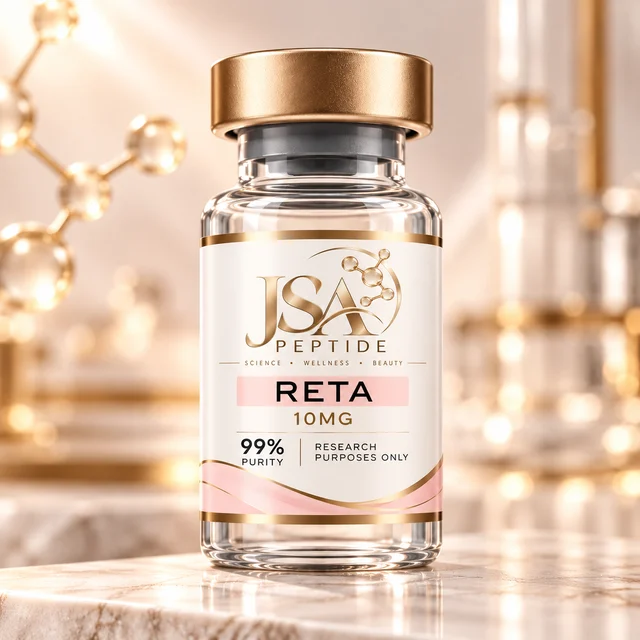
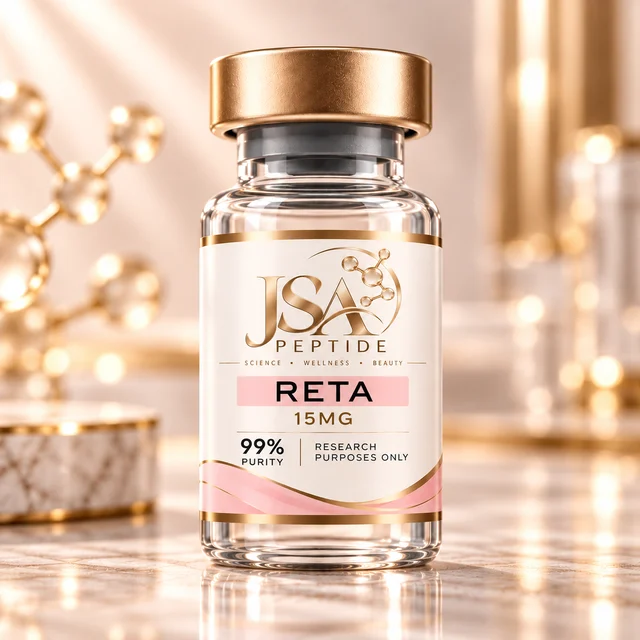
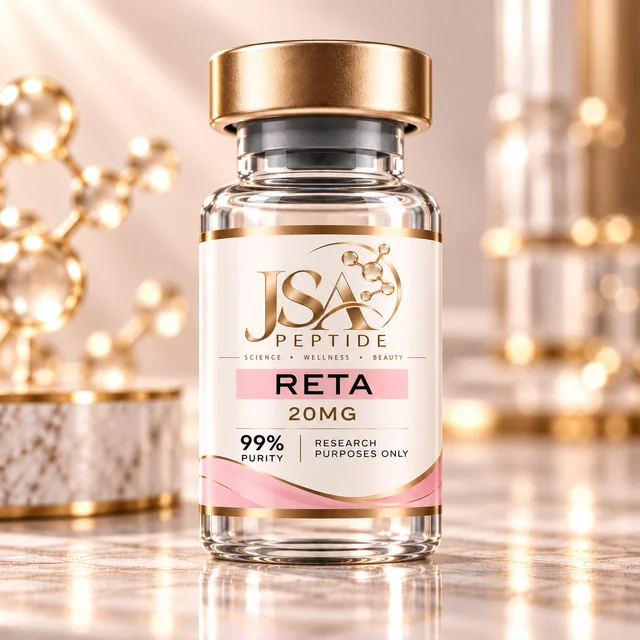
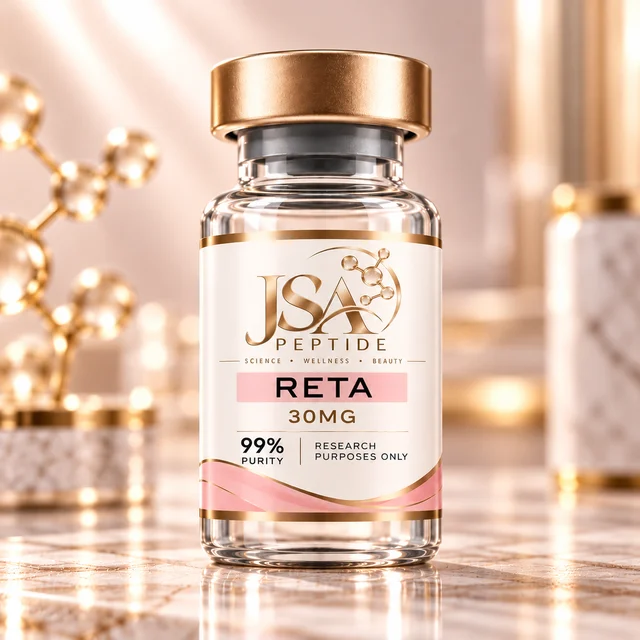
RETATRUTIDE — Scientific background
LY3437943 • Triple-Receptor Metabolic Research Peptide
Scientific background describes the compound, not verified results or quality claims for the supplied vial. Research purposes only; not for human consumption. No self-administration or injection. Research findings do not guarantee individual results.
Retatrutide (LY3437943) is an investigational synthetic peptide designed to simultaneously activate three metabolic hormone receptors: GIP, GLP-1 and glucagon.
This unique triple-agonist mechanism distinguishes retatrutide from conventional GLP-1 receptor agonists and dual GIP/GLP-1 agonists. Research is focused particularly on body-weight regulation, glucose metabolism, energy balance and obesity-related metabolic conditions.
Retatrutide remains an investigational compound and is currently being evaluated in clinical trials. It is not an approved medicine for general public use.
Triple-Receptor Mechanism
Retatrutide is designed to act through three complementary metabolic pathways:
GLP-1 Receptor
Research associated with GLP-1 signalling includes:
- Appetite and satiety regulation
- Caloric intake
- Glucose-dependent insulin secretion
- Glucose homeostasis
- Gastrointestinal motility
GIP Receptor
GIP signalling is involved in:
- Insulin secretion
- Glucose regulation
- Nutrient metabolism
- Energy metabolism
Glucagon Receptor
Glucagon signalling is being investigated for its role in:
- Energy expenditure
- Glucose metabolism
- Lipid metabolism
- Substrate utilisation
The Retatrutide Concept
GLP-1 + GIP + Glucagon → Triple-pathway metabolic signalling
This combination is the defining scientific characteristic of retatrutide.
Why Retatrutide Is Different
Compound GLP-1 GIP Glucagon
Semaglutide ✓ — —
Tirzepatide ✓ ✓ —
Retatrutide ✓ ✓ ✓
Retatrutide extends the dual GIP/GLP-1 approach by adding glucagon receptor activity, creating a three-pathway pharmacological profile.
Clinical Research
Retatrutide has generated significant interest because of the magnitude of weight reduction observed in clinical studies.
In a Phase 2 obesity trial, participants receiving the highest studied dose experienced approximately 24% average body-weight reduction at 48 weeks, compared with approximately 2% in the placebo group.
These figures represent clinical-trial averages and should not be interpreted as guaranteed individual outcomes.
Areas Under Investigation
Retatrutide is being studied across several metabolic and obesity-related conditions, including:
- Obesity
- Overweight with metabolic complications
- Type 2 diabetes
- Body-weight regulation
- Glucose metabolism
- Cardiometabolic health
- Obesity-associated osteoarthritis
- Obstructive sleep apnea
- Metabolic dysfunction-associated steatotic liver disease
These are research areas, not claims that the compound is an approved treatment for these conditions.
Product Information
Compound: Retatrutide
Development code: LY3437943
Category: Investigational peptide
Mechanism: GIP / GLP-1 / glucagon receptor agonism
Research focus: Metabolic and body-weight regulation
Developer: Eli Lilly
Clinical status: Phase 3 clinical development
Research administration: Once-weekly subcutaneous administration has been studied in clinical trials
Research Significance
Retatrutide represents a newer approach to metabolic research by combining three hormone-receptor pathways within a single molecule.
Its scientific interest lies in the potential interaction between:
Appetite regulation
↓
Glucose-dependent metabolic signalling
↓
Energy and substrate metabolism
↓
Overall metabolic regulation
Research continues to determine the long-term efficacy, safety and clinical role of this triple-receptor approach.
Research & Regulatory Status
Retatrutide is investigational.
It has not been approved as a prescription medicine by the FDA or other major regulatory authorities for general public use. Its safety and efficacy continue to be evaluated through clinical trials.
This research product is not presented as an approved weight-loss medication. Weight-reduction outcomes are not guaranteed.
Not intended to diagnose, treat, cure or prevent any disease. This information is educational and does not constitute medical advice. Refer to the product’s safety risks above and request batch-specific documentation.